Sleep comfort, explained
Latex Mattress Toppers: How Thickness and Firmness Shape Comfort
A latex topper can give a mattress a noticeably different feel without changing the bed beneath it. How much it changes depends largely on two details: thickness and firmness. Here’s how to read those specifications, think about your sleep position, and choose a layer that suits your comfort needs.
A small layer can make a big difference—or barely register
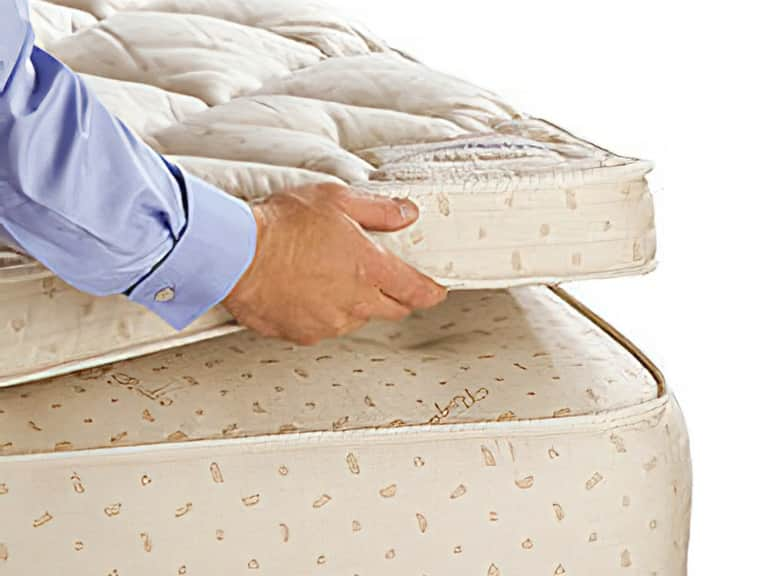
A mattress topper sits between the mattress and the fitted sheet, adding a new surface layer to the bed. That sounds straightforward, but the result depends on more than the topper’s material. A thin, firm layer may make the surface feel a little more responsive. A thicker, softer one may create a more pronounced cushion. And the same topper can feel different to two people, even when they sleep on the same mattress.
That’s because comfort is a partnership between the topper and the mattress underneath it. The mattress provides the foundation; the topper affects the first impression when you lie down and can change how pressure is distributed at the surface. Neither thickness nor firmness should be considered in isolation. Together, they help determine whether a latex mattress topper feels like a subtle adjustment, a plush new layer, or something that doesn’t quite work for your body.
Latex is often valued for its buoyant, springy response. Unlike a material that slowly settles around the body, latex tends to respond quickly when you shift position. But latex toppers are not all alike. Their construction, thickness, and stated firmness can influence how readily they compress and how much they alter the sleep surface. Understanding those differences makes comparing specifications more useful—and less like guessing from a product description.
What thickness tells you
Thickness describes the height of the topper, but it also offers a rough clue about how much material sits between you and the mattress. In general, a thinner topper makes a more restrained change, while a thicker one can create a more noticeable layer of cushioning. That isn’t a guarantee: firmness, body weight, construction, and the condition of the mattress all affect the final feel.
Think of thickness as the potential depth of the adjustment, not a direct measure of softness. A thick, firm latex topper can still feel supportive and fairly buoyant. A thinner, softer one may compress readily, but it has less material to create a substantial change. The interaction matters: a topper must compress under the sleeper while still responding to the pressure it receives from the mattress below.
Thinner layers
A thinner topper may be appropriate when you want a modest surface adjustment and already find the mattress broadly comfortable. It is less likely to transform the overall character of the bed.
Medium-depth layers
A middle-ground thickness may provide a more noticeable balance of cushioning and responsiveness. The actual sensation still depends on firmness and on how much the mattress compresses.
Thicker layers
A thicker topper can create a more substantial change in surface feel. It may be worth considering when you want a more pronounced adjustment, while remembering that it cannot repair a failing mattress.
These descriptions are starting points, not rules. There is no universal thickness that works best for every bed or sleeper. A mattress that is already soft and deeply cushioned may not need much added material. A firm mattress with a sound, even support layer may benefit from a different surface feel. If the bed has a noticeable dip, broken component, or uneven support, adding height on top may conceal the symptom temporarily without correcting the underlying problem.
Thickness can also change practical details. A taller sleep surface may affect fitted-sheet depth, the height of the bed, and how easily you get in or out. If you share a bed, a deeper topper may have a different effect for each person because each body compresses the layers differently. These are not reasons to avoid a thicker layer; they are useful parts of the decision.
Firmness is a clue, not a universal comfort score
Firmness describes how resistant a topper feels when it is compressed. In everyday language, people may call a surface soft, medium, or firm. Some manufacturers also list ILD, short for indentation load deflection, as a technical way to express how much force is needed to compress a foam sample by a specified amount. It can help compare products made and tested in similar ways, but it is not a complete prediction of how a topper will feel in your bedroom.
ILD figures are most useful as points of comparison when the measurements use comparable testing methods. They do not account for every part of the experience: the topper’s thickness, the latex formulation, the mattress underneath, the sleeper’s body, and even the way the material responds over time all matter. A number on a specification sheet can narrow the field, but it cannot make a personal comfort decision for you.
A softer topper generally gives more readily under pressure. That can create a gentler, more cushioned sensation at the surface. A firmer topper tends to resist compression more, which may feel more stable or supportive to some sleepers. Neither description guarantees that the result will be comfortable. A surface can feel pleasantly firm to one person and uncomfortably hard to another; “soft” can mean inviting for one body and insufficiently supportive for the next.
When comparing latex mattress toppers, look at the entire set of specifications rather than choosing by a single word. Consider thickness and firmness together, then ask how each might interact with the bed you already own. If two products have different thicknesses, their firmness labels alone may not offer a meaningful apples-to-apples comparison.
Start with the mattress you have
Before browsing topper options, take a careful look at the mattress. Is it generally level and supportive, but too firm at the surface? Does it feel comfortable in one position and less comfortable in another? Is its cover worn, or is there an obvious depression where you usually sleep? The answers can help distinguish a surface-comfort preference from a deeper support problem.
A topper is designed to modify the feel of the bed, not rebuild its foundation. If the mattress is in good condition but feels firmer than you prefer, a topper may be a reasonable way to make a limited adjustment. If the mattress is sagging or uneven, added material may follow the same contour rather than restoring a level sleeping surface. That can leave the underlying issue in place while adding another layer to manage.
It may help to assess the bed when it is bare and on a level foundation, following the mattress maker’s guidance. Notice whether the surface looks even and whether the discomfort is consistent across the bed. Check that the base or frame is stable and properly supporting the mattress. A topper cannot make up for a support system that is damaged or unsuitable.
Consider what you want to change in specific terms. “More comfortable” is understandable, but it is hard to translate into a specification. “A little more cushion at the shoulders,” “less of a firm surface,” or “a more responsive feel when I turn” gives you a clearer starting point. There is no need to diagnose pain or promise a medical result; this is simply a way to describe your comfort preferences.
How sleeping position enters the picture
Sleep position influences where your body places pressure on the mattress and how much cushioning may feel comfortable. It doesn’t dictate a single correct topper, but it can help you think through thickness and firmness choices.
- Side sleeping: The shoulder and hip press more directly into the surface. Some side sleepers prefer additional cushioning at those areas, while still wanting the rest of the body to feel supported. A topper that is too firm for an individual may feel uncomfortable at pressure points; one that compresses too much may not feel stable enough.
- Back sleeping: Many back sleepers look for a surface that feels even and comfortably supportive. A topper that is too soft for a particular sleeper may allow more sink than they enjoy, while a very firm layer may not provide the surface comfort they want.
- Stomach sleeping: Some stomach sleepers prefer a less yielding surface, though preferences vary. A very thick, soft layer may change the way the body settles into the bed, so a more restrained adjustment may be worth considering.
- Combination sleeping: People who move between positions may appreciate a layer that responds readily as they turn. Latex is often described as springy, but the full feel still depends on the specific topper and mattress combination.
These are useful questions, not rules about how a body should sleep. Many people change positions during the night, and a shared bed may need to suit sleepers with different preferences. In those situations, note what each person feels rather than assuming one position or one firmness label tells the whole story.
Body weight and compression: why the same topper can feel different
A topper responds to the pressure placed on it. As a result, two people lying on an identical layer may not experience the same degree of compression. A sleeper with a lighter build may find that a firm topper feels quite substantial, while a heavier sleeper may compress it more and experience a different level of cushioning. These are broad observations, not a way to calculate an ideal firmness from body weight alone.
How pressure is distributed also matters. Body shape, sleeping position, mattress construction, and the areas that contact the bed all influence the sensation. This is one reason a showroom impression or a specification sheet may not perfectly predict how a topper feels after a full night at home. When possible, consider return terms and trial conditions before deciding, and read them closely rather than assuming every seller offers the same policy.
For couples, one shared topper creates one surface across the bed. If one person prefers a softer feel and the other prefers a firmer one, a single choice may be a compromise. Discuss what each sleeper wants to change, and consider whether the current mattress contributes to the difference. Clear expectations can prevent the common disappointment of expecting one layer to feel identical to both people.
A simple way to compare topper specifications
When product descriptions start to blur together, return to a short checklist. It will not make comfort perfectly predictable, but it helps keep comparisons grounded in your actual bed and preferences.
- Describe the problem with the current surface. Is it too firm, too soft, uneven, or simply not as cushioned as you would like? If there is sagging or damage, investigate the mattress and its support before treating a topper as a fix.
- Choose the size of change you want. A modest change points toward considering a thinner layer; a more pronounced surface change may lead you to compare thicker options. Remember that thickness alone does not determine softness.
- Compare firmness within context. Look at the stated firmness and, where provided, ILD. Use those details to compare similar products, not as a promise of a particular personal sensation.
- Factor in sleep position and movement. Think about where you feel pressure, how much give you like, and whether you regularly shift positions.
- Read construction and care information. Confirm the material description, the topper’s actual dimensions, and the manufacturer’s cleaning instructions. Different materials may need different care.
- Check the practical details. Verify the fit on your mattress, sheet depth, return terms, and any guidance on foundations or compatible bedding.
It can be helpful to keep expectations modest and specific. A topper can change the feel of the sleep surface, but it cannot promise better sleep, prevent discomfort, or correct every cause of a restless night. Your sleeping environment, routine, and health can influence how you sleep too. The most useful goal is to find a layer that feels more comfortable and works with the mattress you have.
Common assumptions worth setting aside
“Thicker always means softer.” Not necessarily. Thickness describes the depth of the layer; firmness describes how much it resists compression. A thicker topper can still feel firm, and a thinner one can feel yielding.
“A higher ILD must be better support.” ILD is a comparison point, not a ranking of quality or a universal comfort scale. The right feel depends on the sleeper and the mattress beneath the topper.
“A topper can fix any mattress.” It may alter surface comfort, but a layer on top does not restore damaged or sagging support underneath. Check the condition of the mattress and bed foundation first.
“One firmness works for everyone who sleeps in a particular position.” Sleep position is one helpful consideration among many. Personal preference, body shape, mattress feel, and movement through the night matter as well.
“Specifications can replace trying the bed.” Product details are useful for narrowing down options, but they cannot capture every person’s experience. If a trial or return policy is available, understand its requirements before buying.
The bottom line on latex topper thickness and firmness
A latex mattress topper can be a practical way to adjust the surface feel of a bed that is otherwise in good condition. Thickness helps indicate how substantial that adjustment might be; firmness gives a sense of how readily the material resists compression. Neither specification tells the full story on its own.
Begin with the mattress you already have, identify the change you want, and think about how you sleep. Then compare thickness, firmness, and ILD as connected details rather than isolated numbers. A thinner layer may offer a gentler update; a thicker one may create a more noticeable change. A softer feel may provide more give, while a firmer one may feel more resistant. The best match is the one that makes sense for your own comfort preferences and the support underneath it.
Sleep comfort is personal, and a product description cannot guarantee what a night’s rest will feel like. But a thoughtful comparison can replace guesswork with better questions—and bring you closer to a bed that feels right for you.